
Temporal Bone Paraganglioma
Temporal Bone Paraganglioma Services
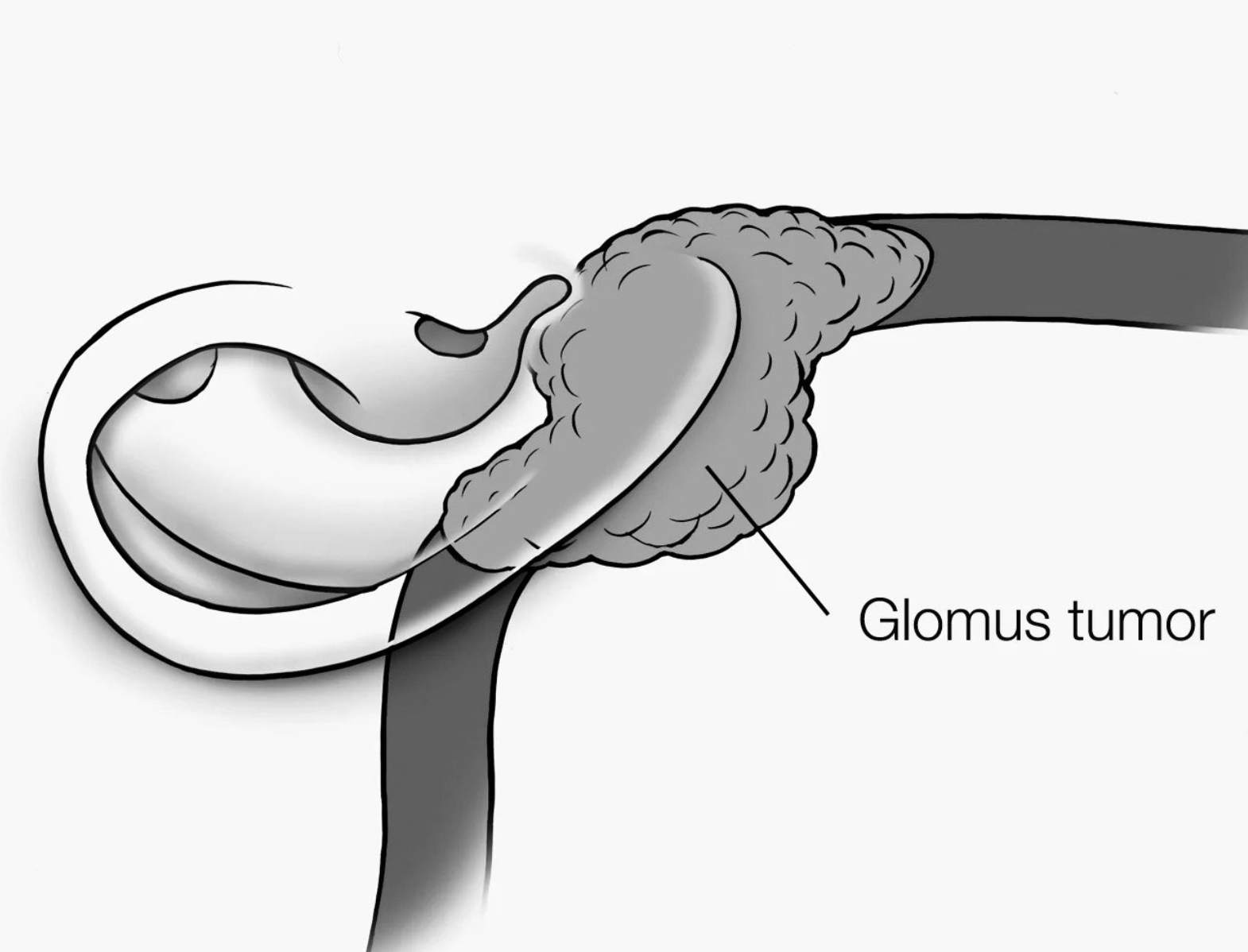
At Spokane ENT, we provide expert diagnosis and treatment of temporal bone paragangliomas, rare tumors that arise from neural crest cells in the temporal bone region. These tumors, also known as glomus tumors, can develop in various locations including the middle ear (glomus tympanicum), the jugular bulb region (glomus jugulare), or along the vagus nerve (glomus vagale). Our team performs comprehensive evaluation including detailed history taking, physical examination, audiometric testing, and advanced imaging studies such as CT scans and MRI to confirm the diagnosis, assess tumor size and location, and determine the extent of involvement with surrounding structures including blood vessels, nerves, and the skull base.
We specialize in the management of temporal bone paragangliomas using a multidisciplinary approach that considers each patient's unique tumor characteristics, symptoms, and overall health. Treatment options may include observation for small, asymptomatic tumors; surgical resection for tumors that are causing symptoms or growing; or radiation therapy for tumors that are not amenable to complete surgical removal. Our surgeons utilize advanced skull base surgical techniques, working closely with neurosurgeons when necessary, to safely remove these complex tumors while preserving critical structures such as the facial nerve, hearing function, and major blood vessels. We also coordinate care with radiation oncologists when radiation therapy is indicated as part of the treatment plan.
Our team provides comprehensive preoperative evaluation and counseling to help patients understand their diagnosis, treatment options, expected outcomes, and potential risks. We work closely with patients and their families to develop individualized treatment plans that balance the goals of tumor control, symptom relief, and preservation of function. Following treatment, we offer long-term follow-up care including regular imaging studies and clinical examinations to monitor for tumor recurrence or progression. We also provide ongoing support and coordination with other specialists as needed to address any complications or long-term effects of treatment, ensuring the best possible outcomes for our patients with these rare and complex tumors.
Temporal Bone Paraganglioma Resources
Frequently Asked Questions
Paragangliomas are vascular tumors that can arise in the temporal bone (ear area). They may cause hearing loss, pulsatile tinnitus, or other symptoms. Most are benign but can grow and cause problems.
Treatment may include observation, surgery, or radiation depending on size, location, and symptoms. Your ENT will evaluate and discuss options, often in consultation with other specialists.
Most temporal bone paragangliomas are benign. However, they can grow and affect hearing, balance, or cranial nerves. Some may have a hereditary component; genetic counseling may be recommended.
Symptoms may include pulsatile tinnitus, hearing loss, ear fullness, or facial weakness. Evaluation includes imaging (MRI, CT) and sometimes angiography.
Pulsatile tinnitus (sound that beats with your pulse) warrants evaluation. It can be caused by paraganglioma or other vascular conditions. Your ENT will recommend appropriate imaging.