
Pulsatile Tinnitus
Pulsatile Tinnitus Services
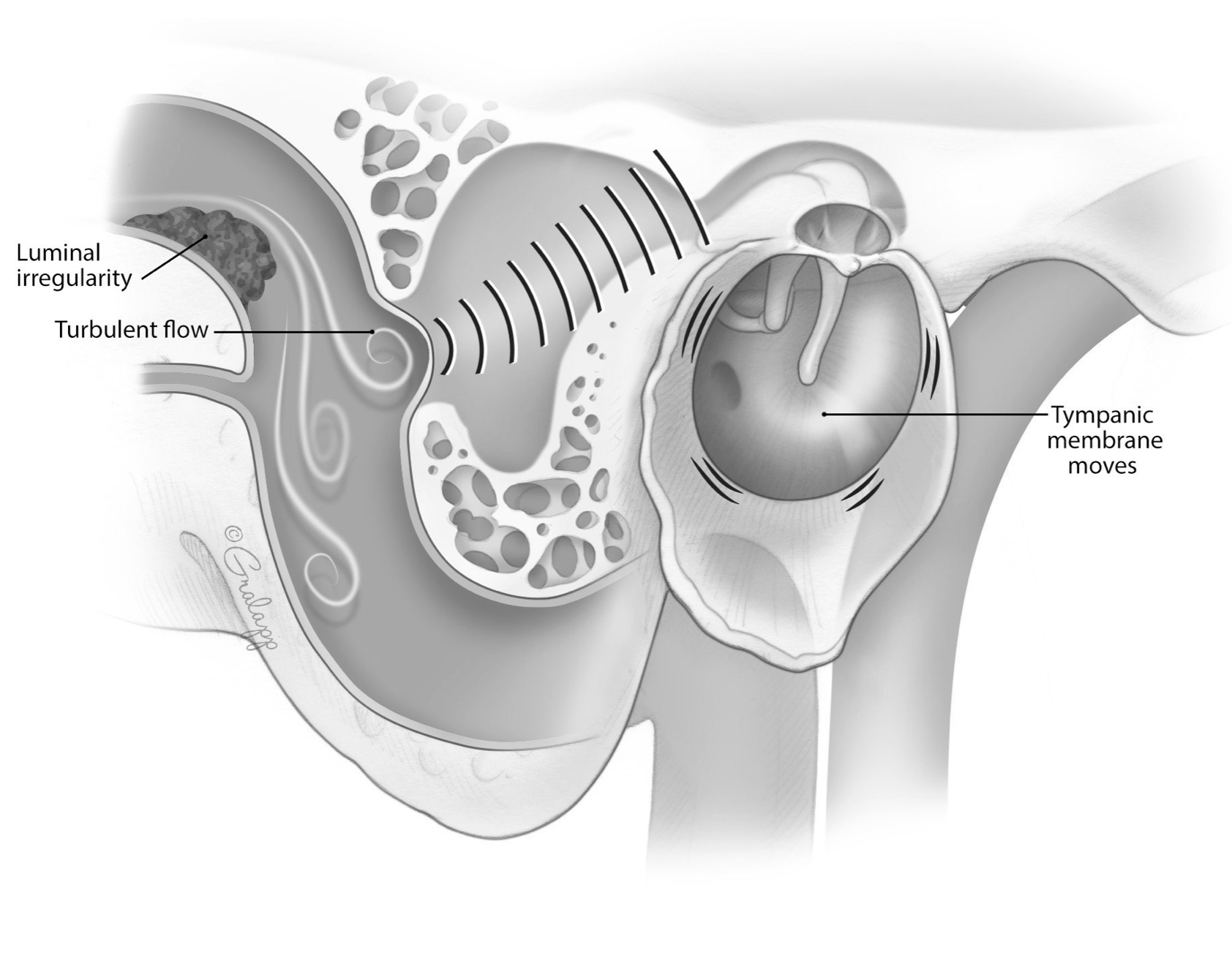
At Spokane ENT, we specialize in the evaluation and treatment of pulsatile tinnitus, a rhythmic sound in the ear that matches the heartbeat. Unlike non-pulsatile tinnitus, which is typically a constant ringing or buzzing sound, pulsatile tinnitus is characterized by a whooshing, pulsing, or thumping sensation that synchronizes with the patient's pulse. This condition can be caused by various vascular or structural abnormalities affecting blood flow near the ear, and our team performs comprehensive evaluation to identify the underlying cause and develop appropriate treatment strategies.
We utilize advanced diagnostic techniques to evaluate pulsatile tinnitus, including detailed history taking to understand the nature and timing of the symptoms, physical examination including auscultation of the head and neck to detect objective pulsatile sounds, and specialized imaging studies. Our evaluation includes computed tomography (CT) angiography, magnetic resonance imaging (MRI) with angiography, and in some cases, conventional angiography to visualize vascular structures and identify potential causes such as arterial stenosis, venous abnormalities, vascular tumors, or arteriovenous malformations. We also perform audiometric testing to assess hearing function and rule out other otologic causes of the symptoms.
Our treatment approach for pulsatile tinnitus is tailored to the underlying cause identified through comprehensive evaluation. For vascular causes such as arterial stenosis or venous abnormalities, we may collaborate with vascular surgeons or interventional radiologists to address the underlying vascular pathology. In cases where pulsatile tinnitus is caused by structural abnormalities such as superior semicircular canal dehiscence or other temporal bone defects, we may recommend surgical repair. For some patients, medical management or lifestyle modifications may be appropriate. Our team works closely with patients to develop individualized treatment plans that address the specific cause of their pulsatile tinnitus and improve their quality of life.
Frequently Asked Questions
Pulsatile tinnitus is a rhythmic sound in the ear that matches your heartbeat. Unlike constant ringing or buzzing (non-pulsatile tinnitus), it sounds like whooshing, pulsing, or thumping synchronized with your pulse. It can be caused by vascular or structural abnormalities affecting blood flow near the ear.
Evaluation includes a detailed history, physical exam with auscultation of the head and neck to detect objective sounds, and imaging such as CT angiography, MRI with angiography, or conventional angiography. Audiometric testing may also be performed to assess hearing and rule out other causes.
Common causes include arterial stenosis, venous abnormalities, vascular tumors, arteriovenous malformations, or structural defects such as superior semicircular canal dehiscence. A thorough evaluation is needed to identify the underlying cause.
Treatment depends on the cause. Options may include collaboration with vascular surgeons or interventional radiologists for vascular issues, surgical repair for structural defects like SCD, or medical management and lifestyle changes. Your ENT will develop an individualized plan.
You should see an ENT if you hear a rhythmic, pulse-synchronized sound in one or both ears, especially if it is new, worsening, or unilateral. Early evaluation helps identify treatable causes and rule out serious conditions.